


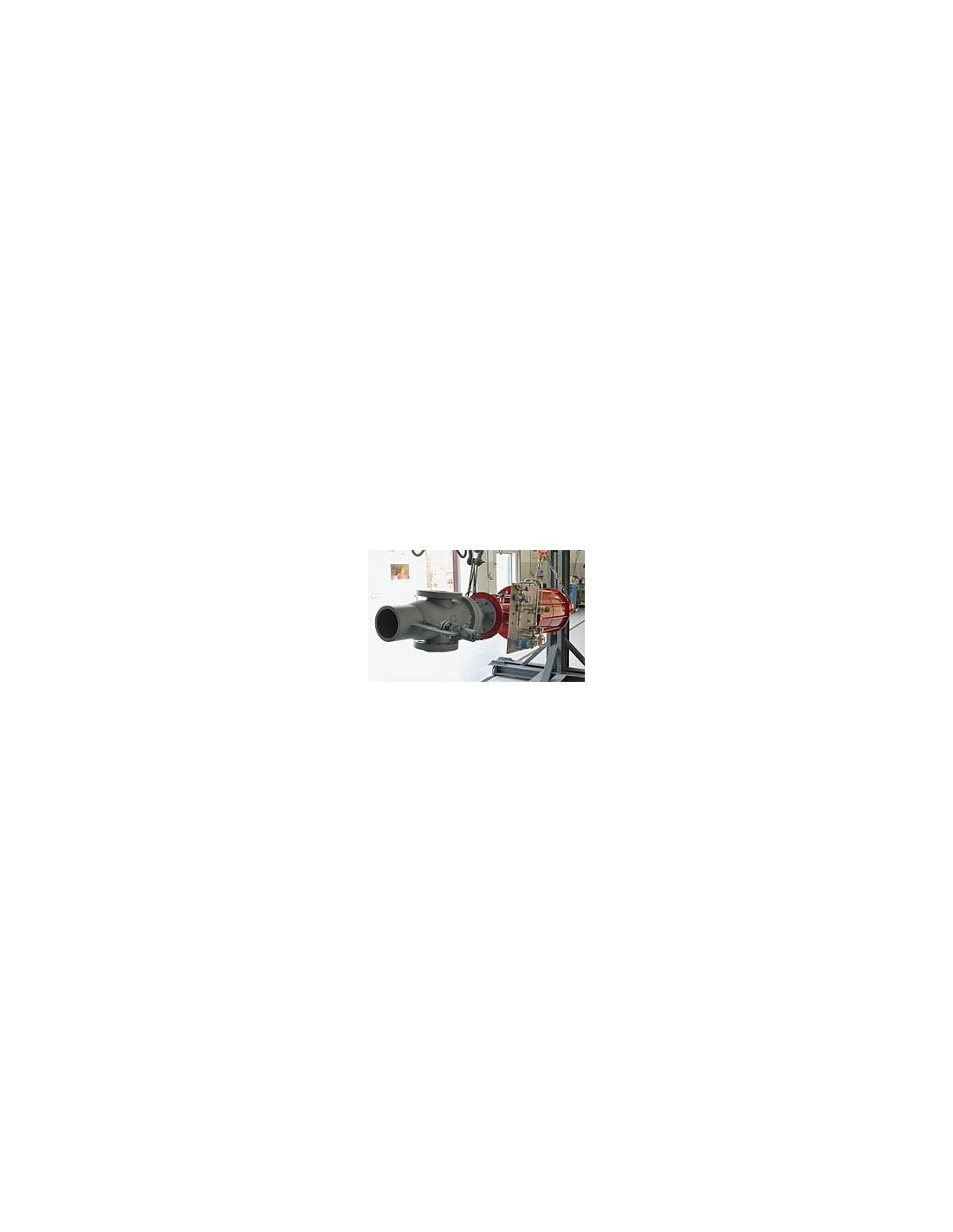
Gate Valve - Through Conduit Expanding Gate | Fluitek Fluitek Valves - 1
Gate Valve - Through Conduit Expanding Gate | Fluitek Fluitek Valves - 2
Gate Valve - Through Conduit Expanding Gate | Fluitek Fluitek Valves - 1
Gate Valve - Through Conduit Expanding Gate | Fluitek Fluitek Valves - 2

Gate Valve - Through Conduit Expanding Gate | Fluitek

Fluitek Through Conduit Expanding Gate Valve

The Fluitek Through Conduit Expanding Gate valve is a full-bore isolation valve designed for pipelines requiring continuous internal diameter and minimal debris accumulation in the body cavity. It is applicable in oil & gas, terminals, transmission pipelines, natural gas, liquid fuels, and process fluids. It is not a throttling valve.

Construction and Sealing Mechanism

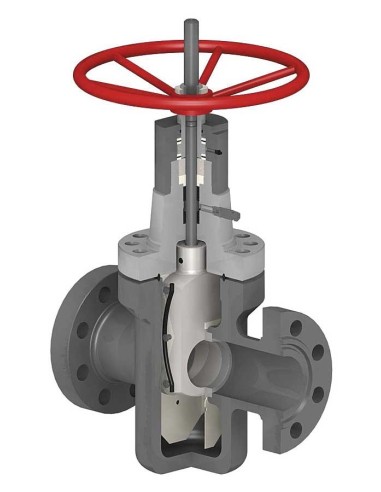
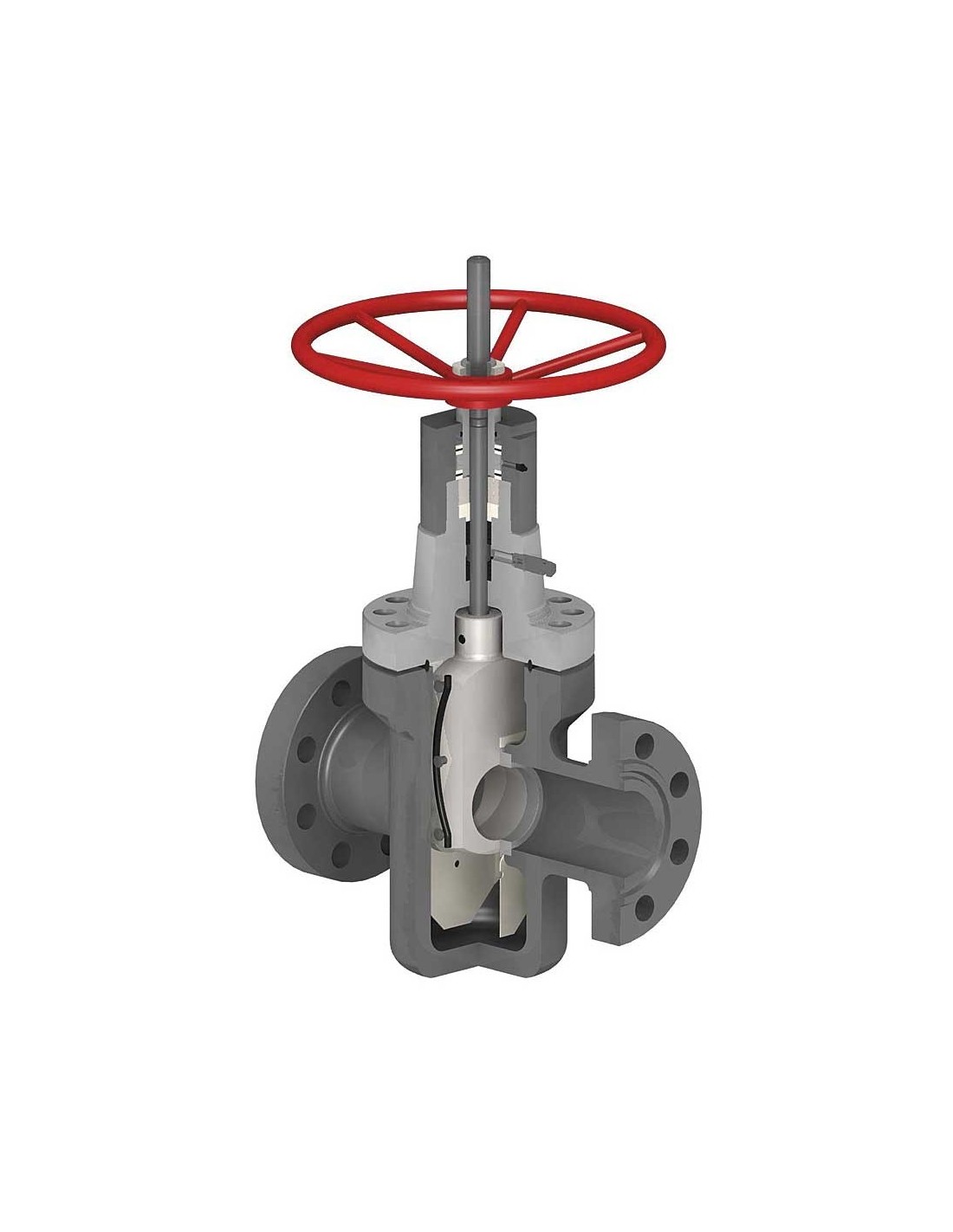
The gate consists of two parts, gate and segment, with inclined sliding surfaces. These parts are held together by springs or, in larger diameters, by a lever system. During opening/closing, the two sections contract to avoid continuous rubbing against the seats.

There are two configurations:

  • Single expanding: gate expands in the closed position.
  • Double expanding: gate expands in both closed and fully open positions.

The latter configuration is used when mechanical loading of the seats is required in both extreme positions.

Pressure, Materials, and Connections

  • Standardization: ANSI
  • Connection: flanged
  • Pressure classes: Class 300, 600, 900, 1500, 2500
  • Materials: carbon steel, low temperature carbon steel, austenitic stainless steel, duplex, super duplex, nickel alloys
  • Typical construction: bolted bonnet

Seating surfaces, gate, and sliding surfaces can feature tungsten carbide coating, especially in high-pressure or high-wear applications.

Dimensions and Selection

The technical sheet provides a reference table for ANSI Class 1500, ranging from 2" to 16", with bore sizes 49–360 mm and weights 110–4200 kg. Sizes above 16" are available upon request.

FAQ

Difference from slab through-conduit?
The expanding gate uses mechanical expansion of gate/segment towards the seats. The slab gate primarily relies on floating seats.

When is it selected?
In pipelines requiring full bore, clean passage, and positive mechanical loading of the seats.

What certifications are mentioned?
ISO 9001, PED 2014/68/EU, ATEX 2014/34/EU, IEC 61508/SIL, API 6A, API 6D, API 6DSS, and TR-CU.

Standard (Options)
  • ANSI
Connection (Options)
  • Flanged
Material (Options)
  • Carbon Steel
  • Austenitic Stainless Steel
  • Duplex Stainless Steel
  • Super Duplex Stainless Steel
  • Low Temperature Carbon Steel
  • Nickel Alloys
Pressure Rating (Options)
  • 300 lbs
  • 600 lbs
  • 900 lbs
  • 1500 lbs
  • 2500 lbs

Datasheet and documents

Description

This type of valve includes in itself the features of a through conduit service and of a standard gate valve with a parallel seating surfaces. The through conduit service implies the continuity of fluid flow conduit, excluding any dirt accumulation in the body cavity. The gate is in two halves (the so called “gate” and “segment”) with angled sliding surfaces, kept together by springs or by a lever system for larger dimensions.

Construction is available with single expanding or double expanding system. In the first case, the two halves of the gate are pushed against the seats in the valve closed position by having an internal stop acting on one of the two halves. In the second case the same expansion is also obtained in the valve open position.

During the gate travel from open to close, or close to open, the gate springs or the lever system prevent the gate from being in contact with the seats by “contracting” the two gate halves together. Usual construction is bolted bonnet. FLUITEK ORSENIGO VALVES can supply these valves in a variety of materials: carbon steel, low temperature carbon steel, austenitic stainless steel, duplex and super duplex stainless steel and nickel alloys.

Seating surfaces (seats, gate, sliding surfaces of the two gate halves) are provided with tungsten carbide coating, particularly for high pressure services.

Pressure classes range from ANSI 300# to 600#, 900#, 1500# and 2500#.

Certifications