


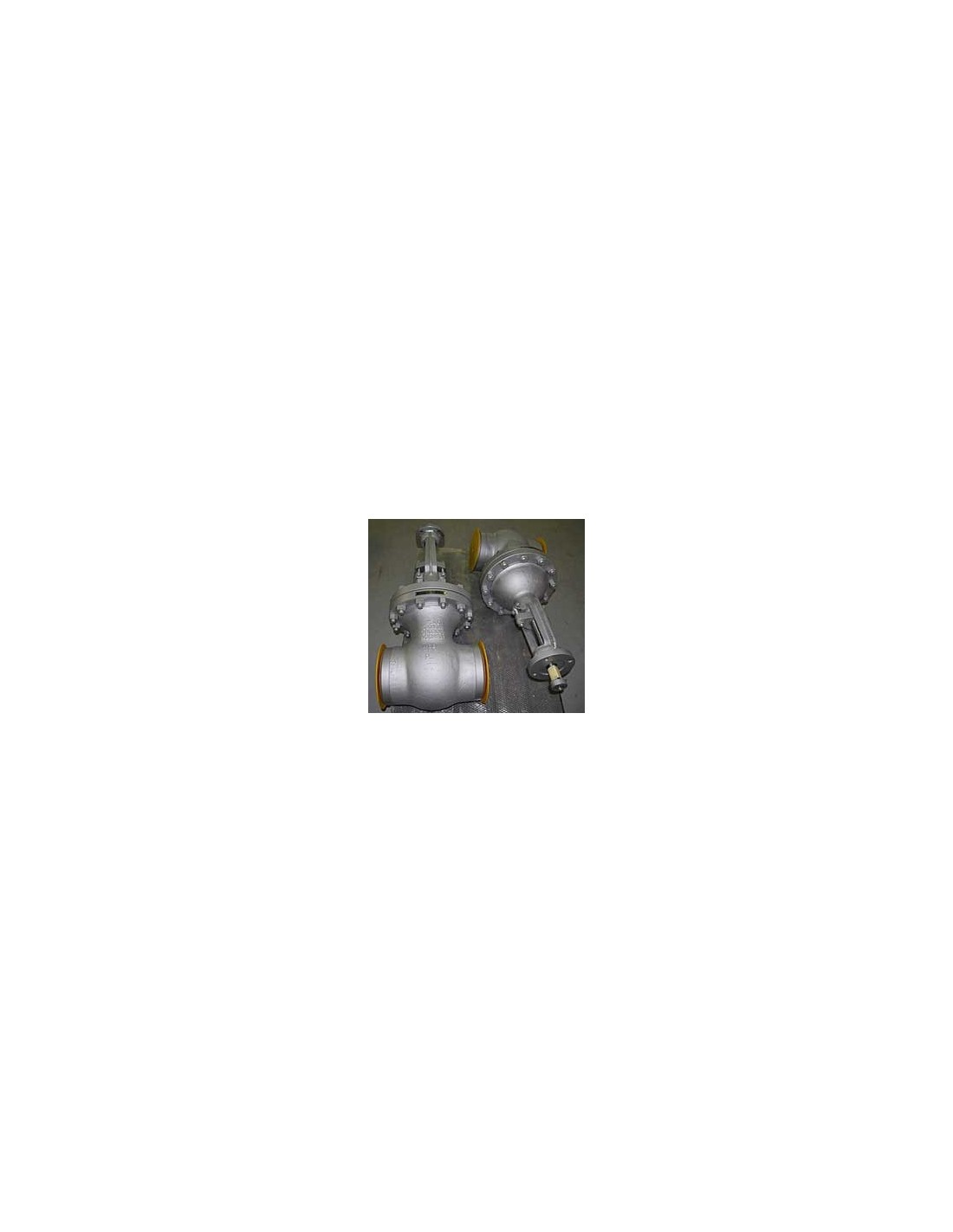
Gate Valve - Parallel Slide Bolted Bonnet | Fluitek Fluitek Valves - 1
Gate Valve - Parallel Slide Bolted Bonnet | Fluitek Fluitek Valves - 2
Gate Valve - Parallel Slide Bolted Bonnet | Fluitek Fluitek Valves - 1
Gate Valve - Parallel Slide Bolted Bonnet | Fluitek Fluitek Valves - 2

Gate Valve - Parallel Slide Bolted Bonnet | Fluitek

Fluitek Parallel Slide Bolted Bonnet Valve

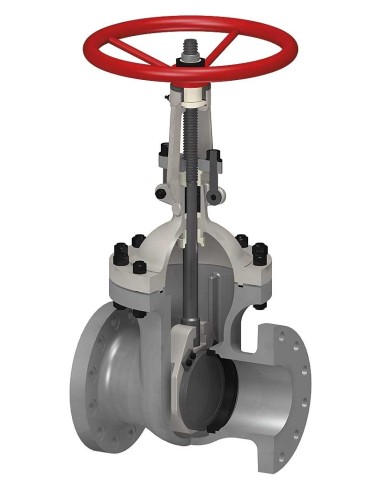
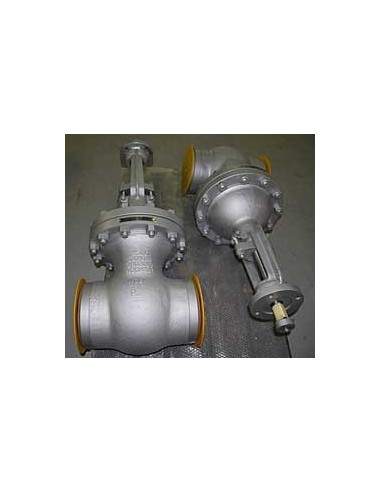
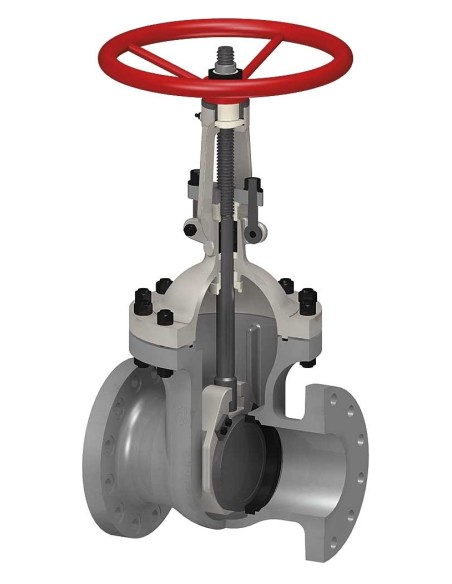
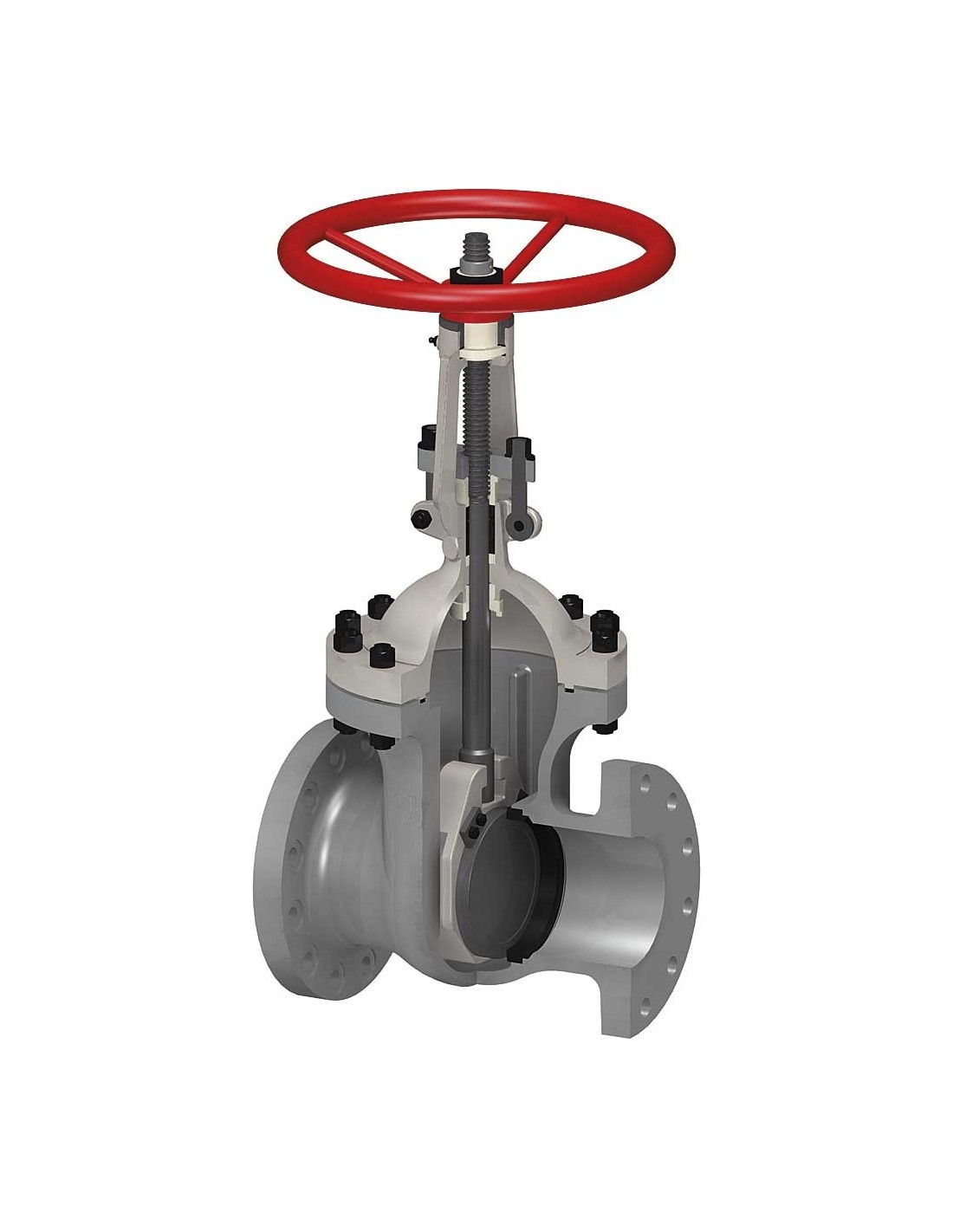
The Fluitek Parallel Slide Bolted Bonnet is an on/off isolation valve, serving as an alternative to wedge gate valves. The disc consists of two spring-loaded half-discs that rest on parallel seating rings and slide over the seats during opening/closing. It is not intended for throttling flow.

Operational Difference from Wedge Gate Valve

The parallel slide design reduces the risk of sticking in the closed position, a phenomenon that can occur in wedge valves when closed on a hot line and opened after cooling. The operating torque is generally lower than that of a comparable wedge valve, an important factor when selecting a gearbox or electric actuator. The sliding action of the discs also aids in removing particles from the seating surface.

Pressure, Connection, and Materials

  • Standardization: ANSI
  • Connections: flanged or butt weld
  • Pressure classes: Class 150, 300, 600
  • Materials: cast steel, austenitic stainless steel, low alloy steel, nickel alloys
  • Materials per ASTM/ASME or EN, based on design conditions

For Class 600, the technical sheet provides indicative sizes 2"–24", with bore 51–591 mm and end-to-end flanged 292–1397 mm. These specifications are used for installation space checks, support weight, and compatibility with existing piping.

Attention Point: Body Cavity Pressure

The double spring-loaded disc can trap fluid in the body cavity when the valve is closed. When unidirectional operation is allowed, this is addressed with an equalizing hole on the upstream side of the disc.

Applications

Suitable for steam, thermal circuits, gases, hydrocarbons, and industrial fluids where isolation with reduced wedging risk is required. Selection is based on P/T rating, thermal cycles, differential pressure, body material, and actuator requirements.

Certifications

Certifications include ISO 9001:2015, PED 2014/68/EU, ATEX 2014/34/EU, IEC 61508/SIL, API 6A, API 6D, API 6DSS, and TR-CU.

FAQ

When is it chosen over wedge?
In thermal cycles or when lower operating torque is required.

Is an equalizing hole needed?
Yes, to prevent pressure trapping in the body cavity.

Is it a throttling valve?
No. It is a fully open or closed isolation valve.

Standard (Options)
  • ANSI
Connection (Options)
  • Flanged
  • Butt Weld
Material (Options)
  • Carbon Steel
  • Austenitic Stainless Steel
  • Low Alloy Steel
  • Nickel Alloys
Pressure Rating (Options)
  • 150 lbs
  • 300 lbs
  • 600 lbs

Datasheet and documents

Description

This type of on-off valve is an alternative to the traditional wedge type gate valves. The disc is in two halves, spring loaded, that seat on parallel seat rings. The disc “slides” in contact with the seats, hence the name. The advantages of this product versus the traditional wedge type product are:

  • The disc never blocks in closed position (phenomenon that may occur with a wedge type that is closed with the line in temperature and opened when the line is cold).
  • The opening/closing torque is much lower than a corresponding wedge type valve, resulting in less expensive actuation systems.
  • The “sliding” feature keeps dirt away from the seating surface.

The double spring loaded disc has the tendency to trap working fluid in the body cavity when the valve is closed. This is avoided, when unidirectional functioning is allowed, by applying an equalizing hole on the upstream part of the disc.

Design codes and overall configuration, including stem-to-disc connection are the same than the wedge type gate valves. Materials range from carbon steel to low alloy steel, to austenitic stainless steel, to nickel alloys.

Materials are either to ASTM/ ASME standards or to EN standards, either harmonized or calculated to design conditions. Pressure classes (per ANSI standard) are normally ranging from 150# to 300# to 600#. Size range depends on pressure class requirements, FLUITEK ORSENIGO VALVES having no limits in relation to market requirements.

Certifications