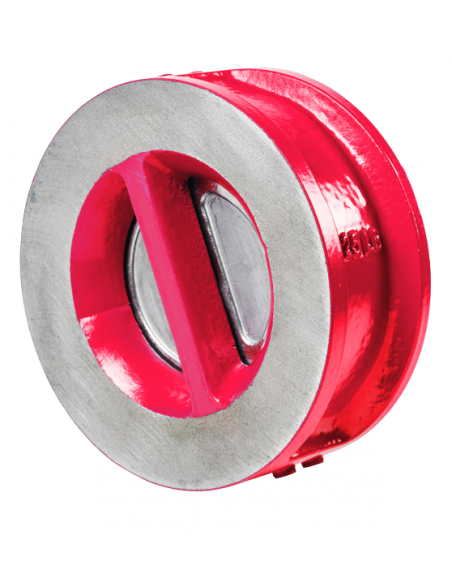


The Cla-Val 582 Series Two-Door Wafer Check Valve has torsion springs that force the two doors to shut before flow reversal, reducing the water hammer potential that normally occurs with single-door swing check valves. To help reduce water hammer, the two-door design also reduces the travel distance from open to shutoff for a quicker response. Extremely short in lay length, the valve is both a compact and an economical solution.


Seawater Two-Door Check Valve type 582SWS | Cla-Val
Cla-Val 582SWS Two-Door Wafer Check Valve
The Cla-Val 582SWS is a dual-plate wafer check valve designed for seawater applications. The body is manufactured from ASTM B148 Aluminum Bronze (Alloy 95200), providing corrosion resistance suitable for aggressive marine environments and seawater distribution networks.
Technical Data
- Type: Two-door wafer check valve
- Suitable Media: Seawater
- Connection: Wafer/flanged (ANSI standard)
- Pressure Rating: 150 lbs (ANSI Class 150)
- Body Material: ASTM B148 Aluminum Bronze, Alloy 95200
- Mechanism: Dual plates with torsion springs
Operation
Torsion springs bias the plates toward the closed position, enabling rapid closure prior to full flow reversal. The reduced travel distance from open to closed minimizes water hammer compared to conventional swing check valves.
Applications
Commonly used in:
- Seawater pumping stations
- Desalination plants
- Seawater cooling systems
- Port and harbor installations
- Shipbuilding and offshore industrial systems
Selection Criteria
Valve selection should consider ANSI flange class, required flow rate, allowable pressure drop, seawater chemistry, operating temperature, and corrosion protection requirements. Material compatibility and maintenance intervals are critical for long-term operation in saline environments.
FAQ
Why is aluminum bronze used?
Aluminum bronze offers superior resistance to seawater corrosion compared to standard cast iron, reducing the risk of dezincification and pitting.
What is the function of the dual-plate design?
The dual-plate mechanism provides shorter closing travel and faster response to flow reversal, reducing the likelihood of slam and associated pipeline stress.
Is this valve suitable for potable water?
This model is primarily intended for seawater and industrial water applications; suitability for potable water should be verified based on project specifications and local regulations.
Datasheet and documents
Description
Certificates
Tap to zoom
