
Check Valves
Fire protection check valves are installed in sprinkler networks, fire pump discharge lines, hydrant systems, and fire suppression zones to prevent reverse flow toward pumps, headers, or supply mains. Operation is automatic and depends on flow differential pressure; when forward flow decreases or reverses, the disc returns to the seat and limits backflow of water.
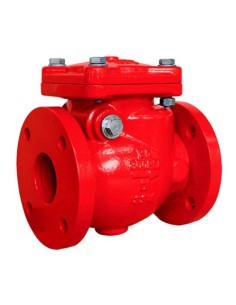
This category includes the Genebre 2403 flanged swing check valve for fire protection service. The valve is specified with ductile iron GGG.40 body and cover, EPDM seat, design in accordance with AWWA C508, flanged ends to ASME B16.42, and face-to-face dimensions to ASME B16.10. Rated working pressure is 300 PSI, with operating temperature range from 0 to +80 °C. The valve carries UL/FM approval for fire protection applications.
Valve selection should consider nominal diameter, fire system design pressure, allowable pressure loss, installation position, flow direction, and access requirements for the inspection cover. In systems with fire pumps, the check valve should also be assessed for potential water hammer, closing velocity, pipe support conditions, and interaction with jockey pump operation. These factors affect disc stability, non-return function, and transient pressure behavior during start-stop cycles.
Maintenance checks should include seat cleanliness, free movement of the clapper, gasket condition, flange joint integrity, body corrosion, and the presence of debris or solids that may prevent full closure. In standby fire protection networks, periodic flow testing is required to verify mechanical operation and shutoff tightness. Inspection should also confirm that no leakage, sticking, or seat damage is present that could impair reverse flow isolation.