
Butterfly Valves
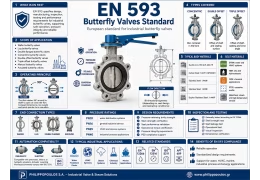
Marine butterfly valves are used in shipboard piping systems where shut-off or basic flow regulation is required with a short installation length and 90° rotary operation. Typical duties include auxiliary water circuits, seawater cooling, ballast, bilge, and general engine room lines, provided that the body material, disc, and seat are compatible with the process medium, operating temperature, and corrosive conditions.
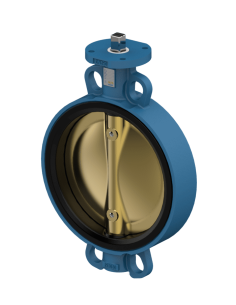
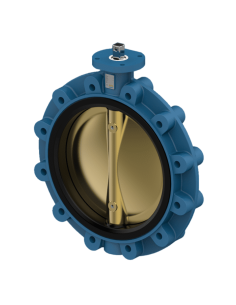
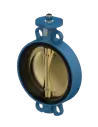
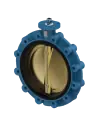
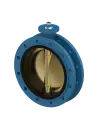
This category includes Alfa Europe butterfly valves in wafer type S57, lug type S64, and short double-flanged type S36. The S57 and S64 versions are available to DIN, ANSI, and JIS standards, with flange compatibility for PN 6, PN 10, PN 16, PN 25, ANSI B16.5 Class 150, and JIS B2211 5K/10K, in sizes from DN40 to DN1200 and temperature ratings from -40 to +250 °C. The S36 series is a short-pattern double-flanged design to JIS, in sizes DN50 to DN1000, with JIS B2211 5K/10K flanges and a temperature range of -23 to +120 °C.
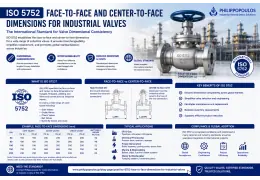
Available material options include EN-JS 1030 ductile iron, stainless steel 1.4408, ASTM A216 WCB carbon steel, and aluminium bronze BS 1400 AB2, with NBR seat construction. The bonded liner affects shut-off integrity, chemical compatibility, and allowable operating temperature. Face-to-face dimensions should be checked against EN 558-1 Series 20 or JIS F-7480, depending on valve type and the piping standard used on the vessel.
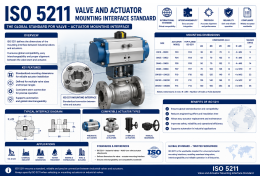
Valve selection should consider flange class, installation orientation, operating torque, risk of disc corrosion, seat wear from suspended solids, and access for liner or actuator replacement. In throttling service, opening angle, flow velocity, and differential pressure should be evaluated to limit noise, vibration, cavitation tendency where applicable, and uneven seat wear. For maintenance planning, attention should also be given to seat leakage, actuator mounting arrangement, and compatibility with the required isolation duty.