
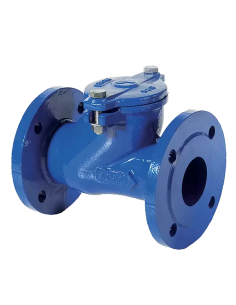
Ball
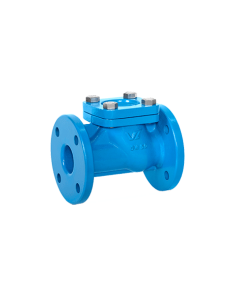
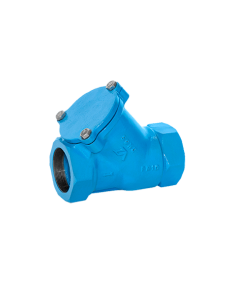
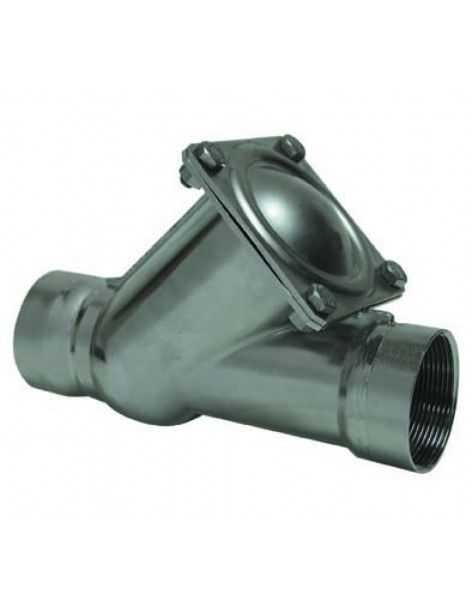
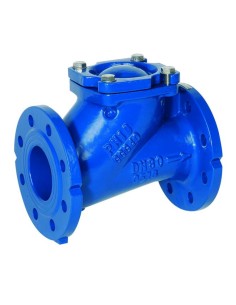
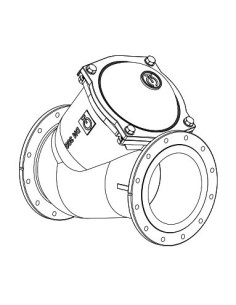
Ball check valves are used to prevent reverse flow in pump stations, water distribution systems, wastewater networks, industrial liquid service, sewage, and media with elevated viscosity or suspended solids. Operation is based on a free ball that is lifted by forward flow and returns to the seat when differential pressure decreases or reverse flow occurs. This category includes the Brandoni 07, Zubi T115AR / T115-99AR, Genebre 2417 / 2453, and Cast Flow series.
Valve selection should be based on flow rate, minimum opening pressure, allowable pressure drop, installation orientation, solids content, ball material, seat material, and serviceability requirements. Ball check valves are typically specified where full-bore flow area, low head loss, and self-cleaning operation are required. In wastewater or solids-laden service, a removable cover allows inspection, cleaning, or ball replacement without removing the valve from the pipeline.
Available versions include DIN and ANSI execution, with pressure ratings PN10, PN16, Class 125 lb, and Class 150 lb, and with BSP, NPT, or flanged end connections. Body materials include EN-GJL-250, EN-GJS-400-15, EN-GJS-500, ductile iron, cast iron, steel, AISI 316, CF8 / AISI 304, stainless steel, and super duplex. Seat and ball coatings include NBR; in selected series the ball is manufactured from resin, aluminium with nitrile coating, or cast iron with nitrile coating.
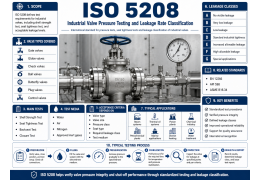
For Cast Flow, flanged versions are specified from DN40 to DN600 and threaded versions from DN25 to DN80, with design reference EN 16767 / EN 12516-1 and testing to EN 12266 / ISO 5208. Declared temperature range is -30 to +200 °C, with minimum backpressure for tight shut-off in the range of 0.3 to 0.5 bar. Compatibility with gases or steam must be verified for each design; Brandoni 07 is specified for wastewater and viscous liquids, but not for steam or gas service.