

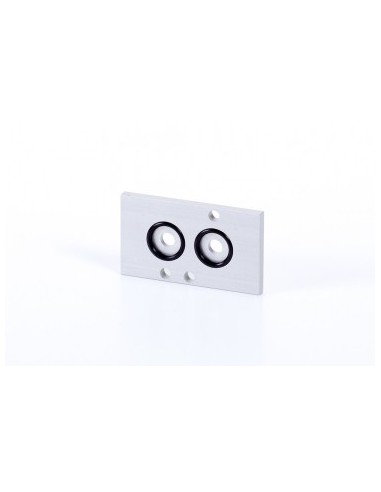



Adaptorplate with NAMUR 1 interface for cylinder-valve combinations
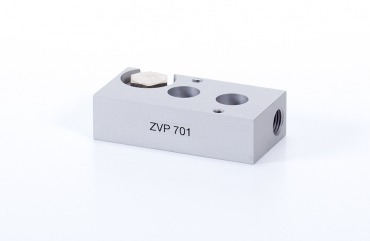
| Type number | Port size | A | Port size | B | Orifice size | Interface |
|---|---|---|---|---|
| ZVP 701 | G 1/4" | banjo | G 1/4" | DN 7 | NAMUR [1/4"] |
| ZVP 101 | G 3/8" | banjo | G 3/8" | DN 10 | NAMUR [1/4"] |
| ZVP 121 | G 1/2" | banjo | G 1/2" | DN 12 | NAMUR [1/2"] |
| ZVP 121-701 | G 1/2" | banjo | G 1/4" | DN 7 | NAMUR [1/4"] |
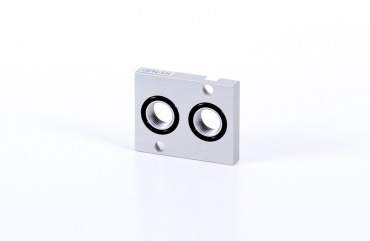
Connection plate with NAMUR 1 interface | G 1/4" ports
| Type number | Interface | Use and Content |
|---|---|---|
| GPN 1/4 | NAMUR [1/4"] | Adapter to convert a der 1/4" Namur-interface into 2 x G 1/4" ports |
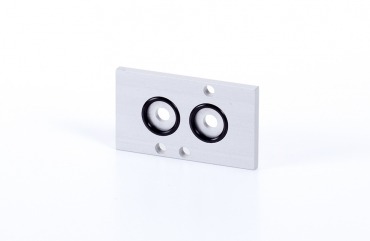
Intermediate plates with NAMUR-interface
| Type number | Interface | Use and Content |
|---|---|---|
| ZPN 5 | NAMUR [1/4"] | 5 mm spacer-plate, Namur-interface, Aluminum, in case 30 mm wide coils are used on 22 mm wide 1/4" Namur-valves. |
| ZPN 5 K | NAMUR [1/4"] | 5 mm spacer-plate, Namur-interface, PA, in case 30 mm wide coils are used on 22 mm wide 1/4" Namur-valves. |
| ZPN 8 | NAMUR [1/4"] | 8 mm spacer-plate, Namur-interface, Aluminum, in case 36 mm wide coils are used on 22 mm wide 1/4" Namur-valves. |
| ZPN 6 5 | NAMUR [1/2"] | 5 mm spacer-plate, Namur-interface, Aluminum, in case 36 mm wide coils are used on 22 mm wide 1/2" Namur-valves. |
| ZPN 6 10 | NAMUR [1/2] -> NAMUR [1/4] | - |
| ZPN 701 90 | NAMUR [1/4"] | Plate to turn a Namurvalve by 90° on the actuator. |
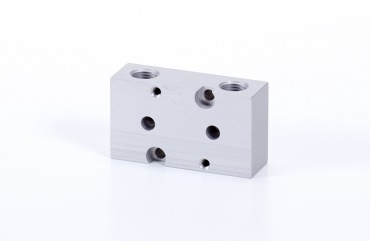
Adaptorplate to convert a valve with interface NAMUR 1 into an in-line valve
| Type number | Interface | Use and Content |
|---|---|---|
| FPNW 22-1/4 | NAMUR [1/4"] | Plate to convert a 1/4" Namurvalve into an inline valve. |