
Feedwater Deaerating Units | Gestra

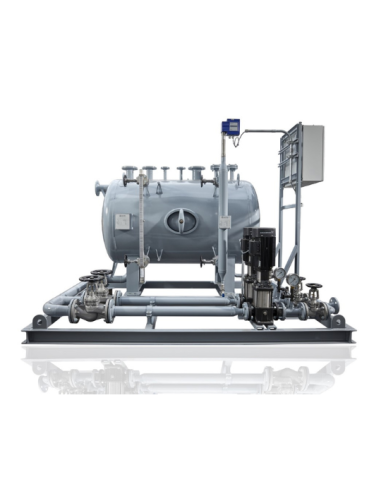
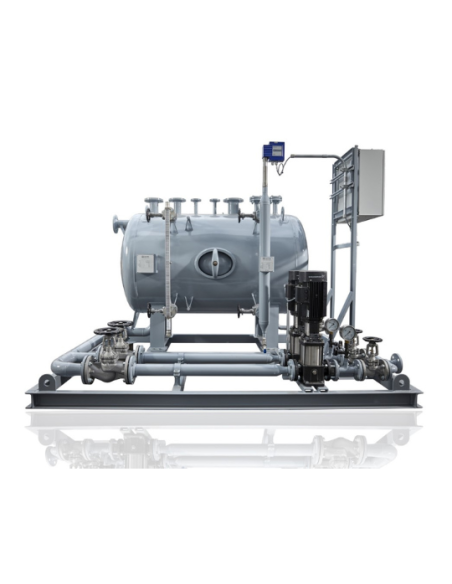
GESTRA Feedwater Deaerating Units – Feedwater Deaeration Systems
GESTRA deaerating units are utilized in steam boiler plants to remove dissolved O₂, CO₂, and non-condensable gases from feedwater. The presence of these gases increases the risk of corrosion in boilers, tanks, condensate lines, and feed pumps.
Operating Principle
Softened water and returning condensate enter the deaeration dome and are distributed across spray stages. Heating steam moves counter-currently, reducing gas solubility and directing them towards venting. In a properly sized setup, oxygen concentration can be reduced below 0.02 mg/L.
Technical Specifications
- NDR deaeration dome and SW tank configuration.
- Reference operating pressure: 0.5 bar(g).
- Operating temperature: 111 °C.
- Flow rate: 0.5 to 70 m³/h, with larger capacities upon study.
- SW tanks: 1 to 70 m³.
- Flanged connections PN16 as per EN 1092.
- NDR dome made of stainless steel 1.4571.
- Tank made of S235JRG2 or stainless version 1.4571.
Instruments and Equipment
The standard setup may include a steam pressure reducer, full-lift safety valve, vacuum breaker, pressure gauge, thermometer, level indicator, level electrode, replenishment valve, filters, check valves, overflow, and drainage.
Selection Criteria
Sizing requires boiler flow rate, replenishment water quantity and temperature, returning condensate quantity and temperature, available steam pressure, deaerator operating pressure, tank material, and replenishment/pressure control type. Pump suction availability must be checked, as feedwater is above 100 °C, posing cavitation risks.
Applications
Suitable for industrial boiler plants, process steam units, food, chemical installations, pharmaceutical applications, steam HVAC, and facilities with high condensate return.
FAQ
When is deaeration required?
When feedwater contains replenishment, open condensate return, or corrosion issues arise.
What should be checked in the water?
GESTRA documentation specifies a chloride limit of 50 mg/L for replenishment water and returning condensate.
Description
Tap to zoom