
Pilot Operated
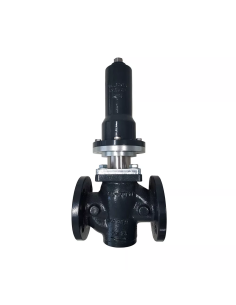
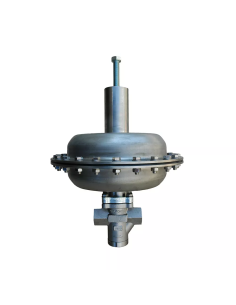
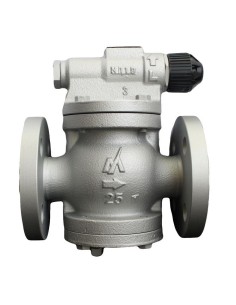
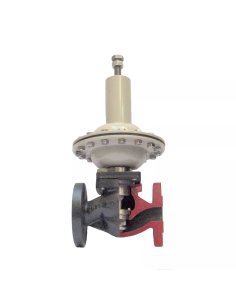
Pilot-operated pressure reducing valves are used for downstream pressure control in steam, water, neutral gas and liquid systems where tighter regulation is required than with a direct-acting regulator. Operation is based on a main valve and a pilot regulator: the pilot senses downstream pressure and modulates the actuator control pressure so that the main plug adjusts flow area according to demand. This category includes Mankenberg DM/RP series, Valfonta M2 and PRV45, and Miyawaki RE3 and RE10N for steam service.
Selection is based on inlet pressure, required outlet pressure, pressure reduction ratio, flow rate, Kvs/Cv, minimum differential pressure, temperature, service medium and load profile. In steam installations, the station should include an upstream strainer, condensate drainage, a separator where needed, correct sensing/impulse line installation, protection of the pilot from condensate, and a properly sized downstream safety relief valve arrangement. Pilot-operated PRVs are used in pressure reducing stations, process branches, HVAC substations, food equipment, dyeing plants, cleaning systems and other services where load variation affects downstream pressure stability.
Available versions include DIN, ANSI and JIS executions, with pressure classes from PN2.5 to PN320, Class 150/300, 10K/16K/20K and 1.6 MPa depending on series. End connections include BSP, NPT, flanged, aseptic and clamp types. Body materials include brass, EN-GJS-400-18-LT, 1.0619, 1.4404, 1.4408, 1.4571, ASTM A216 WCB, ASTM A351 CF3M, cast iron, ductile iron, forged steel and stainless steel constructions. Indicatively, the Valfonta M2 covers DN15-DN100, inlet pressure up to 40 barg, set pressure range 0.02-16 barg and Kvs up to 115 m³/h, while the Mankenberg DM 618 covers DN15-DN100, PN16-PN40, outlet pressure 0.3-10 bar and temperature up to 130 °C.