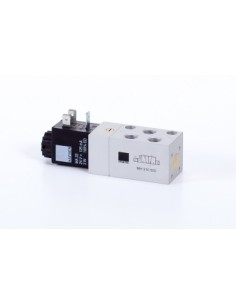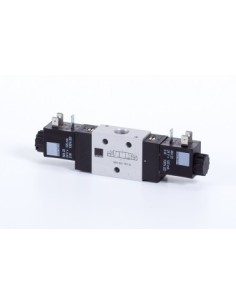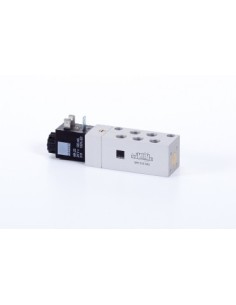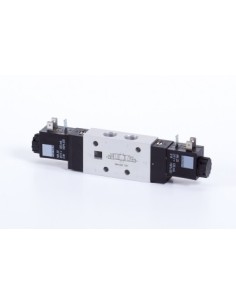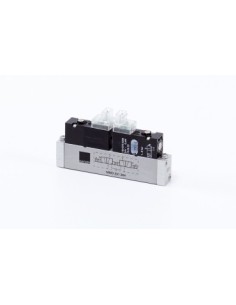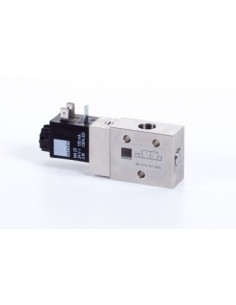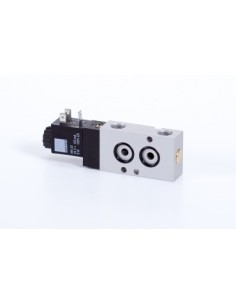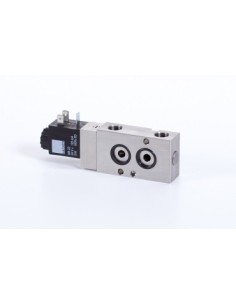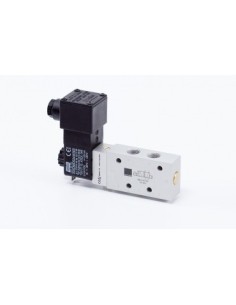

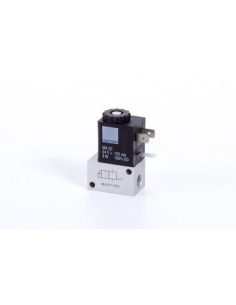
Solenoid Valves
Pneumatic solenoid valves are used in compressed air circuits for the electrical control of pneumatic actuators, cylinders, auxiliary automation functions, and process valves. Selection should be based on the required valve logic—2/2, 3/2, 3/3, 5/2, or 5/3—the available instrument air pressure, required flow capacity, coil voltage, fail position, and the need for manual override.
This category includes Hafner solenoid valves for inline installation, double 3/2 arrangements, NAMUR interface mounting, stainless steel versions, and ATEX configurations for classified hazardous areas. Standard 2/2 valves cover direct-acting and single-solenoid operation, with M5, G1/8", or G1/4" ports, flow rates from 40 to 1250 l/min, and operating pressures up to 10 bar, depending on valve design.
NAMUR valves are primarily used for direct mounting on quarter-turn pneumatic rotary actuators. Available configurations include 3/2, 5/2, NAMUR-Flex, and 5/3, with G or NPT connections, flow capacity up to 3000 l/min, typical operating pressure ranges of 1-10 bar or 2-10 bar, and monostable or bistable actuation options.
Stainless steel versions are applied in corrosive environments, washdown areas, chemical plants, and processes where the body material must withstand moisture, cleaning agents, or aggressive ambient conditions. ATEX versions are available with protection concepts such as EEx d, EEx m, EEx ia, and EEx e mb, in 2/2 and 3/2 configurations, normally closed or normally open execution, flow rates up to 3000 l/min, and low-power coils where required by the control system or hazardous-area design.
During installation, attention should be given to air quality, dew point control, filtration, correct port orientation, exhaust protection, coil protection, wiring, and compatibility with the PLC or safety circuit. Contamination, condensate, or insufficient pilot pressure can result in delayed shifting, seat leakage, or incomplete actuator return.