
Pneumatic
Pneumatic actuators are used to automate on-off and modulating valves in industrial steam, water, air, chemical, fuel, and process fluid systems. Selection is based on the torque or linear thrust required by the valve under differential pressure, available instrument air pressure, actuation time, fail position, operating frequency, and compatibility with positioners, solenoid valves, limit switches, and PLC/DCS interfaces.
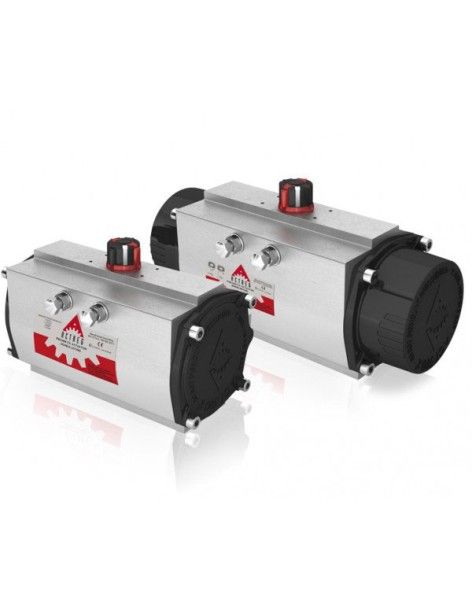
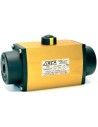
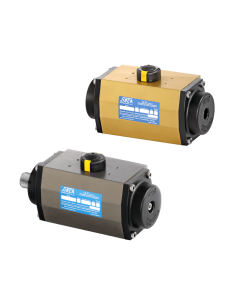
This category includes SIRCA AP/APM and Actreg ADA/ASR rotary actuators for quarter-turn valves, as well as the ARI DP linear pneumatic actuator for valves with axial travel. Double-acting versions use compressed air in both directions of movement. Single-acting versions incorporate spring return to drive the valve to a predefined position on air failure.
SIRCA AP/APM actuators cover torque outputs from 2.4 to 7500 Nm, with operating pressure ranges of 2 to 8 bar for double-acting and 3 to 8 bar for single-acting execution. Standard ambient temperature range is -20 to +80 °C. They are supplied with ISO 5211 mounting, NAMUR interface, and compliance with UNI EN 15714-3, ISO 5211, and VDI/VDE 3845, with ATEX and SIL versions available where required by the installation.
Actreg ADA/ASR actuators are rack-and-pinion units with 90° rotation and adjustable travel tolerance of ±5°. Maximum supply pressure is 8 bar. Temperature ranges extend from -60 to +150 °C depending on O-ring material. Mounting follows NAMUR, ISO 5211, and DIN 3337 standards for integration with quarter-turn valve assemblies and accessories.
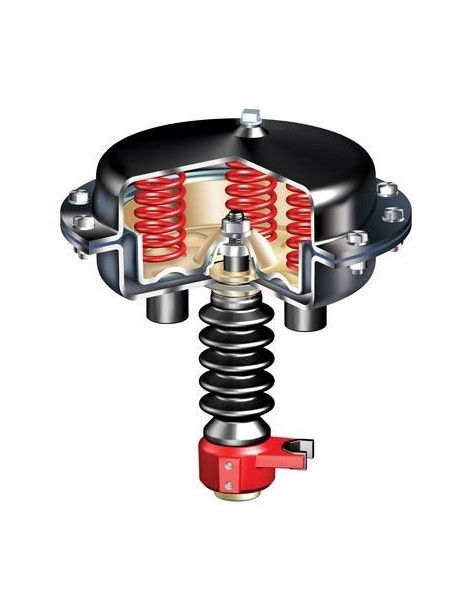
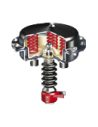
The ARI DP actuator is intended for linear actuation using a diaphragm-cylinder arrangement, with maximum air pressure up to 6 bar and stroke lengths up to 120 mm. Spring-return versions are available for stem extension or stem retraction fail action. Reported output forces range from 2000 N to 47100 N. Standard ambient temperature range is -10 to +80 °C, with low-temperature execution down to -50 °C for selected models.
During specification, the engineer should verify torque safety factor, air quality, moisture removal, filtration, pressure regulation, response time, stroke adjustment, mechanical stops, position indication, and access for manual override or maintenance. Leakage class, seal material compatibility, and failure mode under utility loss should also be reviewed against process conditions.