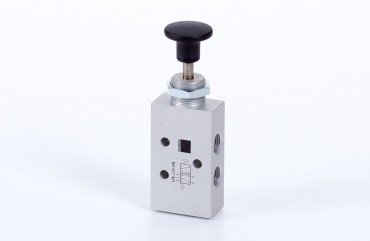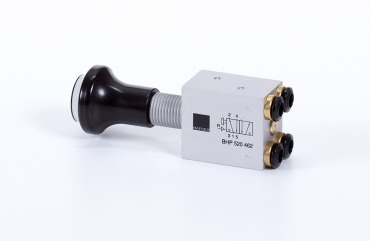

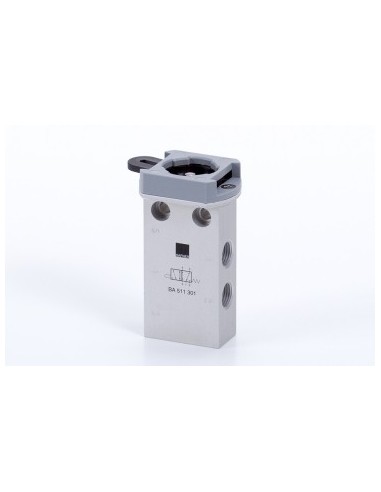
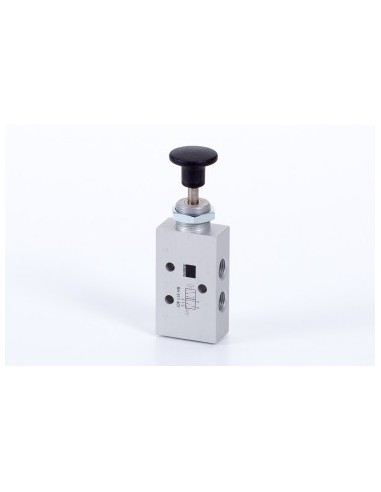
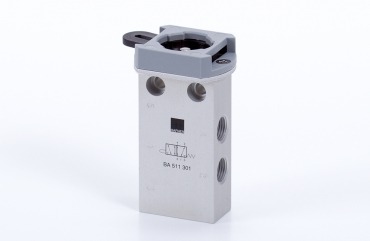
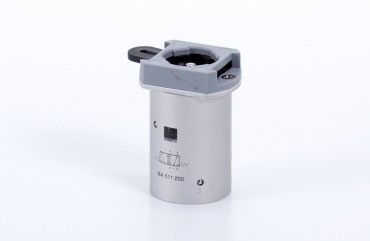
Hafner 5/2 Pneumatic Panel-Mount Air Valves
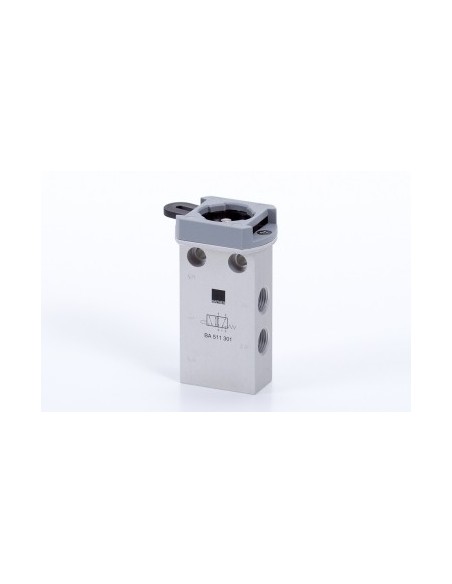
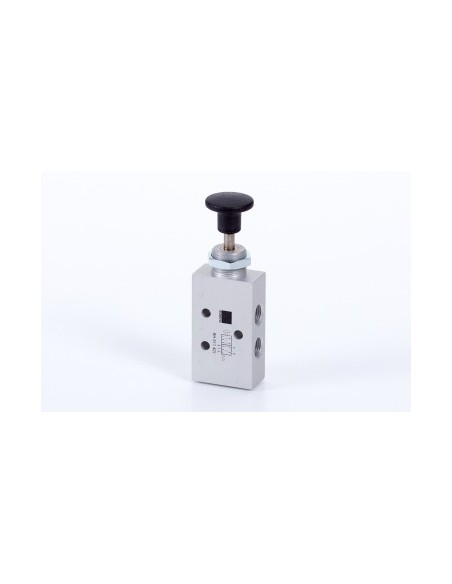
Hafner BA / BH / BHP 5/2 series are manually operated pneumatic valves designed for panel or operator console mounting. These valves are used for direct actuation of double-acting cylinders, without solenoids or pilot circuits. The 5/2 configuration alternates supply and exhaust between the two actuator ports, supporting precise process control in industrial automation.
Available Variants
- BA 511: Push-button 5/2 valve with spring return, suitable for panel hole mounting. Available with M5 or G 1/8” ports, flow rate 125–280 l/min, pressure range -0.9…10 bar (vacuum to 10 bar), actuation force 14 N. Ports can be side or bottom mounted depending on code.
- BH 511: Manual 5/2 valve with spring return, G 1/8” or G 1/4” ports, flow rates 450 or 1250 l/min, actuation force 11–17 N.
- BH 520: 5/2 maintained position valve (latching), G 1/8” or G 1/4” ports, flow rates 450 or 1250 l/min. Suitable for applications requiring stable switching without continuous actuation.
- BHP 520: Maintained position version with push-in fittings Ø4 or Ø6 mm, flow rate 300 l/min, pressure range 1…16 bar.
Selection Logic
Spring return versions are specified for momentary commands, cylinder jogging, or reset operations. Maintained position types are used where the valve must remain in a set state, e.g., manual bypass or local mode selection.
Typical Applications
- Manual control of double-acting pneumatic cylinders
- Pneumatic control panels for machinery
- Service and commissioning stations
- Auxiliary movements in packaging or assembly lines
- Local actuation for grippers, pushers, and clamping devices
Operational Considerations
- Compatible media: filtered, lubricated or non-lubricated compressed air
- Operating temperature: typically -10°C to +60°C (verify per datasheet)
- Pressure class: up to 10 or 16 bar depending on variant
- Sealing: NBR or FKM options available
- Mounting: panel cutout per manufacturer’s specification
- Standards: ISO 5599-1 porting (where specified)
Maintenance
Inspect for leakage at exhausts, air quality, spring return function, panel mounting integrity, actuator wear, and correct port labeling before reconnecting pneumatic lines.