Carbon Filters - KATERCARB 2002 | EMCEL | Philippopoulos s.a.

Carbon Filters - KATERCARB 2002 | EMCEL

Superior Air Purification with Carbon Filters - KATERCARB 2002 | EMCEL

Experience unmatched air quality and reliable performance with the Carbon Filters - KATERCARB 2002 | EMCEL. Specially engineered for industrial use, these carbon filters are the trusted choice for businesses seeking advanced air purification and a healthier work environment. The KATERCARB 2002 is designed to effectively target and remove harmful gases, odors, and chemical vapors, ensuring that your workspace maintains clean and breathable air at all times.

Features & Benefits of Carbon Filters - KATERCARB 2002 | EMCEL

  • Advanced Odor Control: Utilizes high-grade activated carbon to capture and neutralize unpleasant odors and a wide range of airborne contaminants.
  • Efficient Chemical Absorption: Specially formulated to remove chemical vapors, organic compounds, and toxic fumes, making it ideal for demanding industrial environments.
  • Long Lifespan: Built with durability in mind, KATERCARB 2002 filters offer extended operational life, minimizing the need for frequent replacements.
  • Consistent Performance: Delivers reliable filtration efficiency from the first use to the last – keeping your air quality standards high without interruption.
  • Easy Installation: Designed for hassle-free fitting into existing filtration systems, reducing downtime and maintenance effort.
  • Space-Saving Design: Compact and robust construction fits neatly into industrial setups without occupying unnecessary space.

The Carbon Filters - KATERCARB 2002 | EMCEL stand out for their advanced absorption technology, which efficiently traps even the smallest airborne particles. This ensures a safer and more comfortable environment for employees, helping to support productivity and well-being in every industrial setting. The filters are especially effective in areas where the control of chemical odors and fumes is critical for health and safety.

Choose the KATERCARB 2002 | EMCEL carbon filters for a smarter, cleaner, and more effective approach to industrial air purification. Enjoy lasting peace of mind with robust protection against contaminants, delivered in a product designed for performance and ease of use.

Datasheet and documents

Description

Considerable attention and emphasis has been focused on the catering industry to ensure that kitchen extract air is clean and odour free. Effective filtration of grease and particles from the extracted air will not always solve the problem of odours generated by cooking and catering.

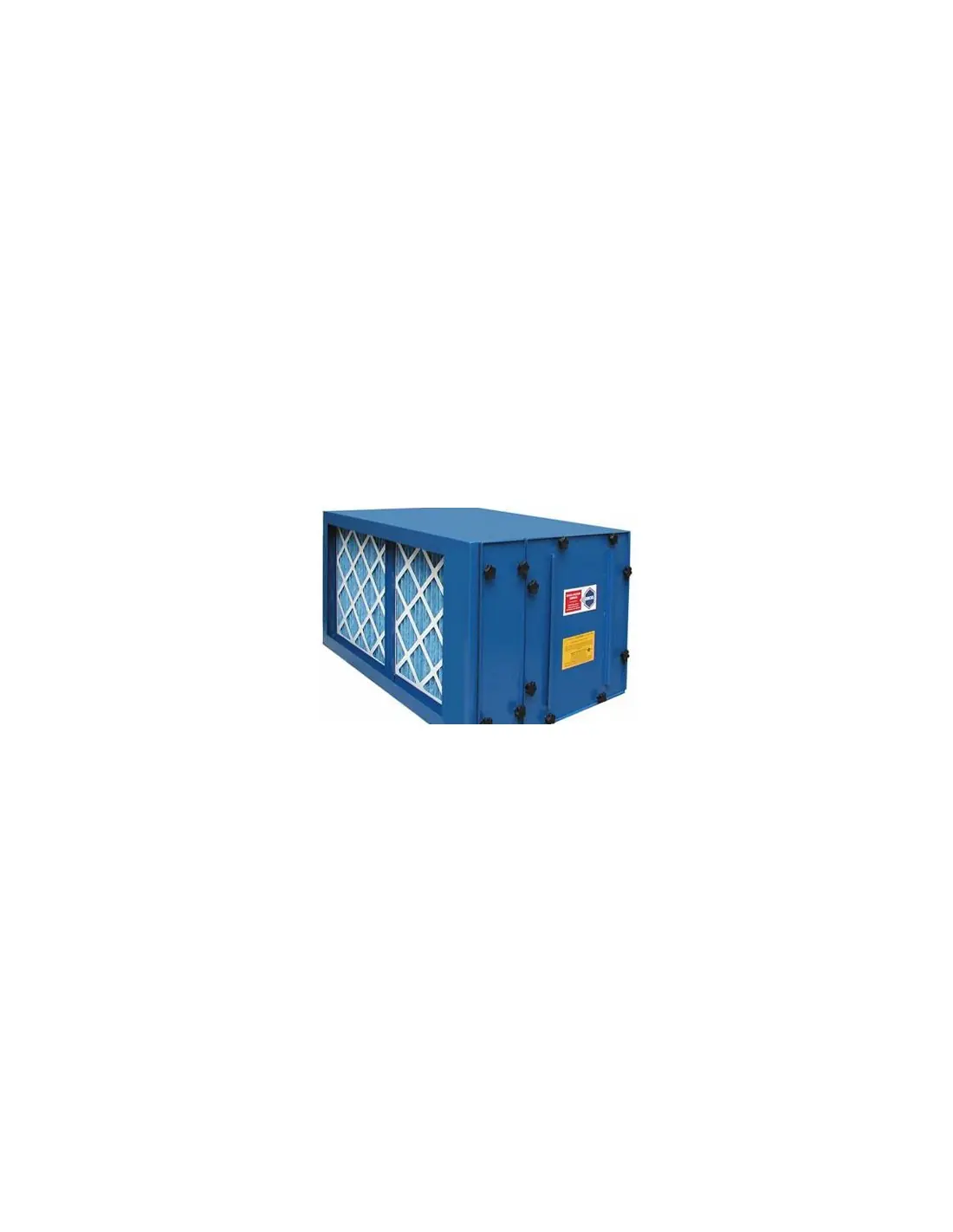
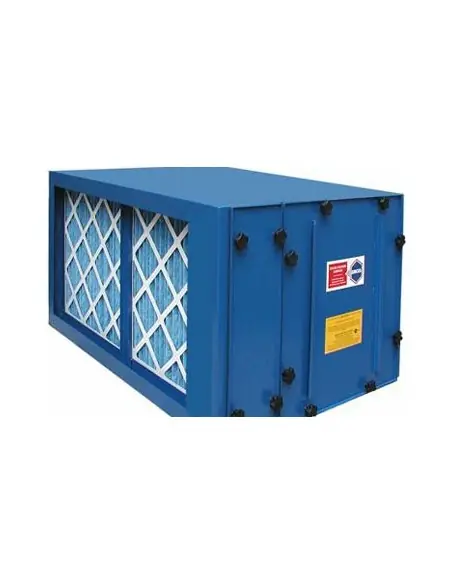
These odours can often be controlled by installing a Katercarb 2002 filter unit in the extract system after grease/particles have been removal by a TRION Electrostatic type unit.

The Katercarb 2002 unit is designed to be used with the TRION T2002 unit and has the same face area dimensions for ease of duct work connection.

The height of the unit is also the same as the TRION T2002, allowing multiple Katercarb 2002 units to be stacked up to match TRION T4002, T6002 and T8002 dimensions.


Certifications

Frequently Asked Questions

Frequently asked questions – Activated Carbon Filters

Q: Which way round does the filter unit need to be installed?

A: The prefilters should be upstream of the carbon cells, i.e. immediately after the inlet to the unit. If more than one grade of dust filtration is present, dust filters are usually arranged from coarsest to finest. HEPA filters may be installed downstream of the carbon cells, which will not have a significant effect on sub-micron particles.

Q: Do I need a prefilter and, if so, what sort?

A: Activated carbon needs to be protected from ingress of particulates, so prefiltration is recommended if there is particle dust in the incoming air. The type of dust filter(s) will depend on the dust loading and particle size distribution. Anything smaller than 1 micron is likely to need a HEPA filter. If an air handling unit is already present, it may already have one or more stages of dust filtration.

For a kitchen extract, we recommend that grease filtration is included in the extract canopy and we include a grease filter in our Katercarb units. It is also recommended that the carbon filter is installed at least six metres from the cooking surface.

Q: What is the dwell time?

A: Dwell Time, otherwise known as residence time, is how long the air is in contact with the carbon as it passes through the filter. Generally, for a standard construction carbon filter, a dwell time of 0.1 second reduces the concentrations of adsorbable contaminants by approximately 70%, 0.2 second by approximately 80%, 0.3 second by approximately 90% and 0.5 second by approximately 95%. Higher efficiencies can be obtained by using multiple passes of cells deep beds or by fully encapsulating them within the housing.

Q: How long will the carbon last?

A: It depends on the type and inlet concentrations of the contaminants. Standard carbon will adsorb about 15% of its own mass in medium or high molecular weight organic compounds: impregnated carbons will adsorb other specific compounds to varying degrees. The longer the dwell time, the higher the carbon loading and generally the longer the period between carbon replacements. It’s also important to maintain any prefiltration upstream of the carbon filter as accumulation of dust, grease or moisture on the carbon will shorten its useful life.

For a unit with removable carbon cells, EMCEL can carry out a carbon life prediction test on one cell to estimate the remaining life (unless the carbon is already exhausted) – provided of course that the carbon is not exposed to anything likely to be hazardous to the person testing it. Units that have the carbon sealed within are not able to be tested easily. Please ask for advice in this instance.

Q: Which way up do the carbon cells need to be installed?

A: It doesn’t matter, as the air will flow through the cells equally well in either direction. They look more aesthetically pleasing with the black felt edging uppermost, but this has no effect on the performance.

Q: Can I just replace a few of the set of carbon cells at a time rather than the whole lot?

A: No. In the vast majority of carbon filter units, the cells are arranged in a V formation to provide a single, extended surface area with a uniform carbon bed depth. This means that all the carbon cells will have equal exposure to the incoming air and will adsorb an equal amount of contaminants over the working life of the filter. If one cell is exhausted, the whole set of cells will be exhausted and need to be replaced. This is why we use one cell in a carbon life prediction test to determine the condition of the whole set.

If the unit has more than one pass of cells (i.e. with groups of one or more cells arranged in series, so that air flows through one group to reach the next group), all the cells in each pass will need to be replaced together. The first pass will adsorb the bulk of the contaminants and will need to be replaced first. There are some units with two passes of cells containing different grades of carbon due to there being a mixture of contaminants that is not all adsorbed by one grade of carbon. In this case, the second pass will not necessarily last longer than the first pass.

Q: I have one of your carbon filter units on site, is there any way to identify it?

A: Yes. If it was supplied from 1992 onwards, it should have a batch number stamped into the top left-hand corner of its main access door. We should be able to trace that on our records.

Small filters, such as Chemicarbs and cylindrical Tank Breather filters are not usually marked with a batch number, but there is less variation among them.

Q: Are the carbon filters washable?

A: No. Washing them will just damage them and render the carbon useless even if it still had some life left.

Q: Is an impregnated grade specific to a particular contaminant or odour?

A: No. Impregnated grades of carbon offer an enhanced adsorption capacity for given types of contaminant (e.g. acid gases, aldehydes, mercury vapour) over unimpregnated carbon, but will also adsorb anything that will be adsorbed by unimpregnated carbon. If the carbon can adsorb it, it will.

Q: Can I have a bespoke unit to suit my application rather than from a set range?

A: Yes. Everything we make is made to order, so we regularly make bespoke filter units to suit specific applications and allow for space restrictions. While certain carbon cell sizes are more convenient and economical for us to make, we are not restricted to a narrow range of sizes.

Q: Should the filter unit be upstream or downstream of the fan?

A: There are two advantages to the filter being installed upstream of the fan. Firstly, it offers some protection to the fan impeller, especially if the contaminant is aggressive. Secondly, in the unlikely event of there being a leak in the ductwork ahead of the filter casework, clean air will be pulled in rather than potentially-contaminated air being pushed out. Otherwise, there is no difference in the filter performance.