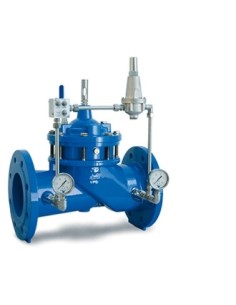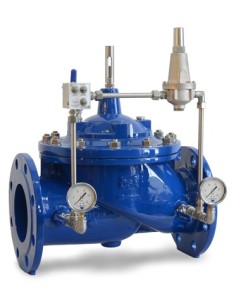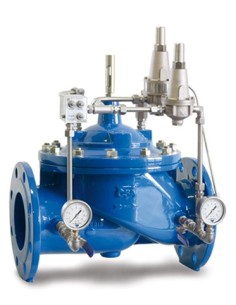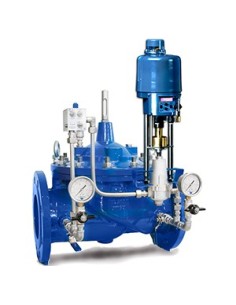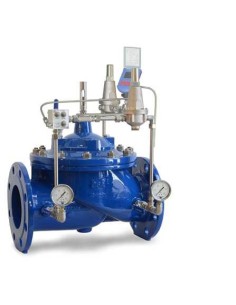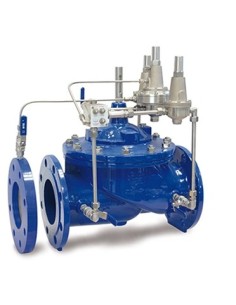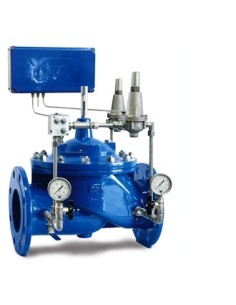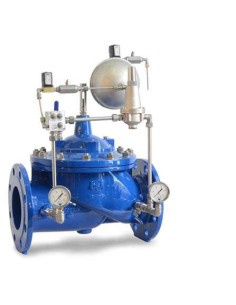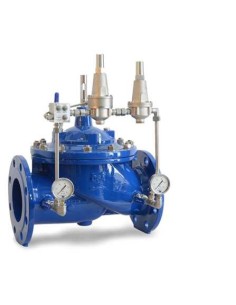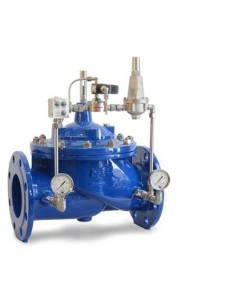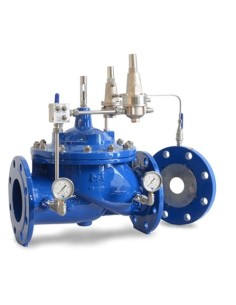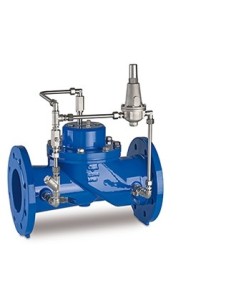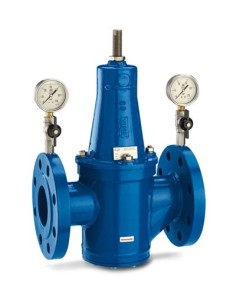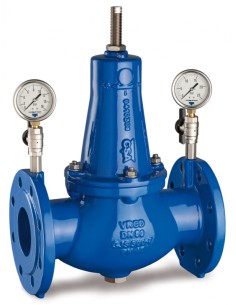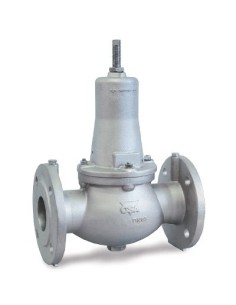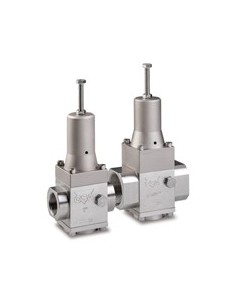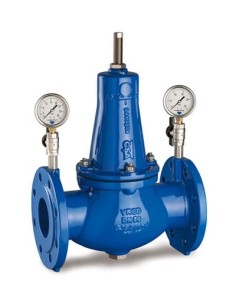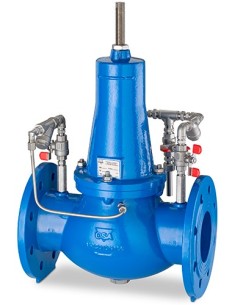

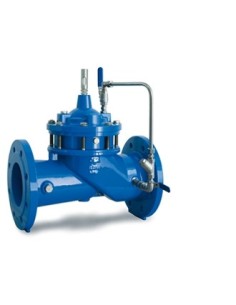
Pressure reducing valves
Water pressure reducing valves are used in potable water networks, industrial water distribution, pumping stations, tank supply lines, HVAC branches and pipelines with elevation differences, where upstream pressure must be converted into a controlled downstream pressure under variable flow conditions. Valve selection is based on inlet pressure, required outlet setpoint, minimum and maximum flow rate, differential pressure, valve sizing, and the risk of cavitation, noise or unstable regulation.
The category includes pilot-operated CSA XLC 300/400, XLC 310/410, XLC 510/610, DC, DC-PR, G, M, ND, ND-H, ND-P, T, 312/412, 315/415 and 331/431 configurations, as well as CSA RDA, VRCD, VRCD ST, VRCD-FF, VRCD-M, VRCD-XN. Available executions cover PN 10, PN 16, PN 25, PN 40 and PN 64 pressure classes, with flanged or BSP/NPT connections and bodies manufactured from ductile cast iron, cast iron, carbon steel or stainless steel, depending on valve type and service conditions.
CSA XLC valves operate through a hydraulic pilot circuit and are typically applied where downstream pressure stabilization is required in main networks, pressure zones or industrial water circuits. Selected versions are designed and tested according to EN 1074, with EN 1092/2 flanges, GJS 450-10 body and cover, stainless steel internal components and treated water temperatures up to 70 °C. RDA pressure reducers are suitable for higher-pressure applications, with electro-welded carbon steel bodies and downstream pressure ranges such as 1.5–6 bar or 5–12 bar.
During installation design, flow direction, pipe alignment, upstream filtration, isolation valves for service, and pressure gauges before and after the valve should be considered. Maintenance should include inspection of pilot lines, strainers, needle valves, seat condition, diaphragm or piston assemblies, and actual downstream pressure under load. These checks help identify hunting, seat leakage, regulation instability and cavitation-related wear before they affect network operation.