
Hose valves
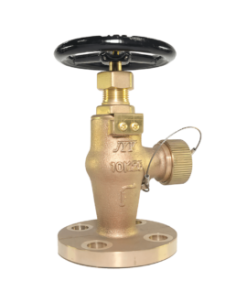
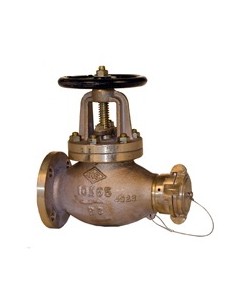
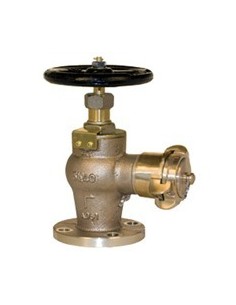
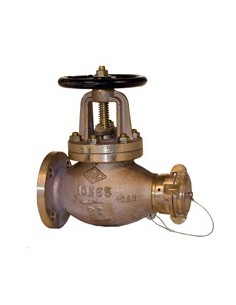
Marine fire hose valves are used on shipboard fire main, standpipe, hydrant, and hose station lines for manual isolation and controlled water delivery to firefighting hoses. Valve selection should be based on flange pressure class, straight-through or angle-flow configuration, body material, outlet connection type, and compatibility with the vessel’s fire protection piping specification.
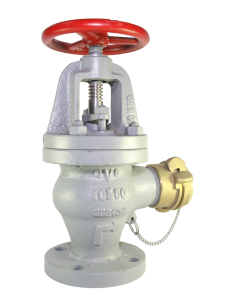
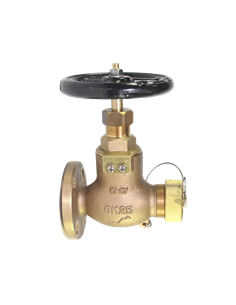
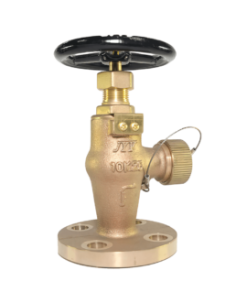
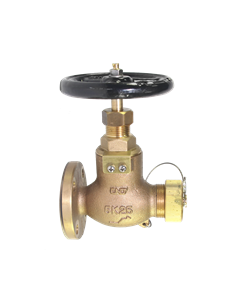
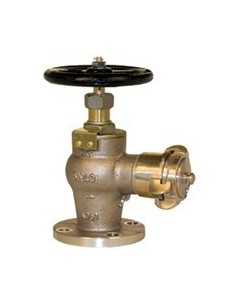
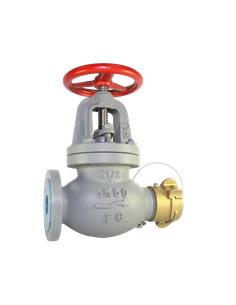
This category includes JIS fire hose valves in brass and cast iron construction, with flanged ends in 5K or 10K pressure classes. F7333 and F7334 types are available in straight and angle patterns, including Nakajima outlet connection where compatibility with marine hose couplings is required. Selection should consider line rating, connection standard, installation orientation, and expected exposure to seawater or humid marine environments.
Cast iron F7333 versions are generally applied on JIS 10K lines where body strength, coating condition, and corrosion allowance must be checked against the installation location and maintenance regime. Brass F7334 valves are used for JIS 5K and 10K service, with evaluation focused on seawater compatibility, galvanic corrosion risk, flange condition, and periodic functional testing. Material pairing with adjacent piping and fittings should be reviewed to limit long-term degradation.
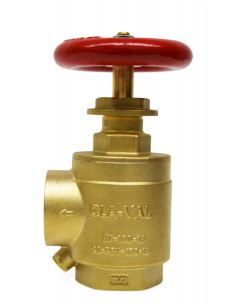
The same group also includes Cla-Val HV-100-15 and HV-100-25 angle hose valves. The HV-100-15 is a 1 1/2 in. angle hose valve with forged brass body and Forgeline bonnet and seat assembly, intended for NFPA 14 Class II and III standpipe systems. It carries UL/ULC listing, FM approval, and a 300 psi pressure test rating. Available end connections include Female NPT x Male NPSH/NST/NYFD and Female NPT x Female NPT, allowing integration with regional hose thread requirements.
Maintenance should include inspection of seat leakage, stem travel, handwheel condition, packing integrity, flange bolting, body corrosion, and cleanliness of the hose outlet connection. In fire protection systems that remain static for extended periods, periodic operation helps reduce seizure caused by salt deposits, scale, or corrosion products. Any valve installed in a marine firewater system should also be checked for shutoff tightness, accessibility, and mechanical condition before service return.