
HEPA Filters
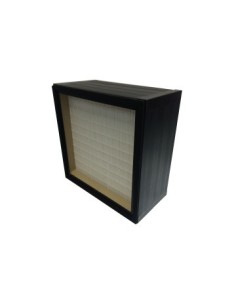
HEPA filters are used as the final stage of particulate filtration in cleanroom HVAC systems, pharmaceutical production areas, laboratories, research facilities, hospital installations, chemical plants, and nuclear applications. Selection is based on the required particle retention efficiency, air volume flow, allowable initial and final pressure drop, installation geometry, frame material, sealing method, and the provision for in-situ integrity testing.
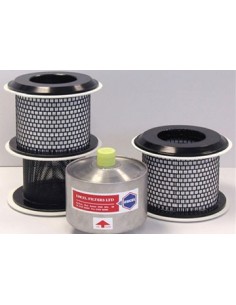
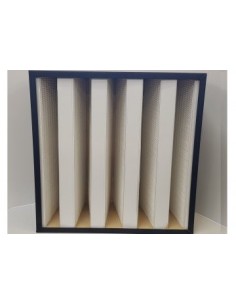
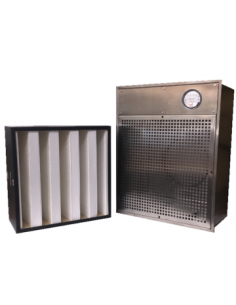
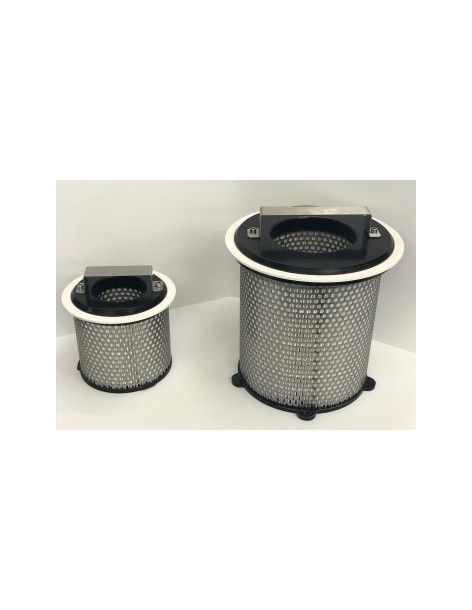
The range includes cylindrical elements for applications with limited face area, HEPA canisters for low airflows of 5 or 25 l/s, high-capacity filters for duty points of 1,700 or 3,400 m³/h with clean pressure drop up to 350 Pa, and panel or terminal units for ceiling or wall installation. HEPA canisters are specified with efficiency greater than 99.99% by BS3928 Sodium Flame Test and initial pressure drop up to 325 Pa or 275 Pa, depending on flow rate.
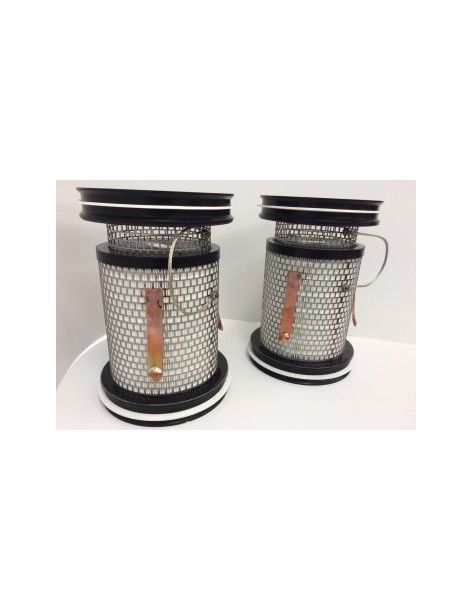
In containment areas or in systems where bypass leakage is critical, filter sealing is as important as the nominal media class. Leaf Seal elements are used in push-push or push-pull housings, can operate in horizontal or vertical orientation, and support handling requirements in change-bag or containment service.
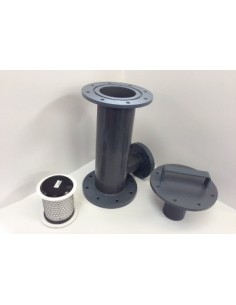
Available construction materials include stainless steel 304, 316, or 316L, painted or galvanized steel, MDF, plastic, and uPVC, selected according to corrosion exposure, cleaning regime, weight constraints, and duct system requirements. Maintenance should be based on differential pressure monitoring, inspection of gaskets and seating surfaces, and certified filter testing such as BS3928 Sodium Flame or EN14644 DOP/Ondina Oil where required by the application.