
Foot Check Valves
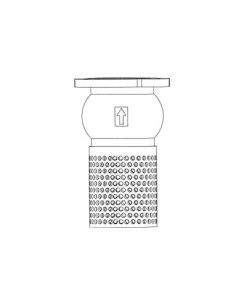
Foot valves are installed at the lower end of pump suction lines to maintain line priming and prevent reverse flow of liquid back to the tank, well, sump, or other suction source. Their function combines a non-return mechanism with inlet protection, allowing the pump to start with an available liquid column and reducing prime loss during shutdown. Typical applications include water supply systems, irrigation, pumping stations, general hydraulic networks, and industrial suction lines handling non-corrosive or otherwise compatible media.
Foot valve selection is based on suction line diameter, pump flow rate, allowable pressure drop, available NPSH, suction lift, fluid cleanliness, solids carryover risk, body material, and seat material. During installation, attention should be given to minimum submergence, clearance from the tank floor and walls, vortex prevention, inlet screen condition, and access for periodic cleaning. Deposits or seat wear may result in loss of prime, frequent pump restarting, cavitation at the pump, or reduced flow capacity.
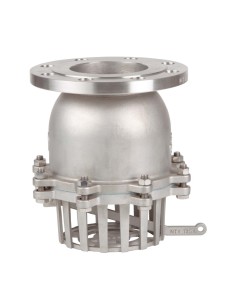
This category includes the Genebre foot valve, type 2448, with flanged connection to DIN PN16. Construction is specified in stainless steel AISI 316 / CF8M, with Viton seat, PTFE gasket, and manual drain arrangement. Maximum allowable working pressure is 16 bar, and available sizes cover flanged connections from 2 in to 8 in. Use of stainless steel body construction with PTFE and Viton sealing materials should be verified against operating temperature, chemical composition of the fluid, and concentration of suspended solids in the pumped medium.