
Check Valves
Water check valves are used in pump stations, potable water distribution networks, irrigation systems, industrial water lines, and treatment installations to prevent reverse flow toward pumps, tanks, headers, or branch distribution lines. Valve selection should be based on flow rate, minimum differential pressure required for opening, closing speed, head loss, installation orientation, and the potential for hydraulic shock.
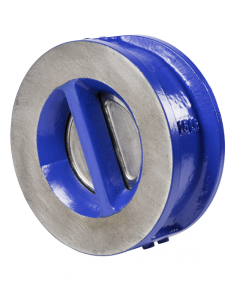
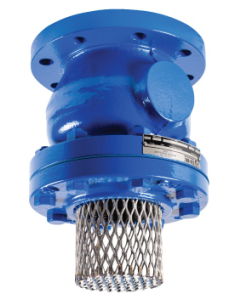
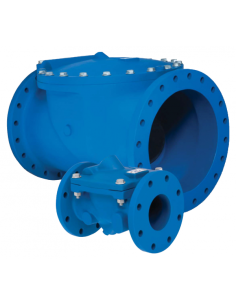
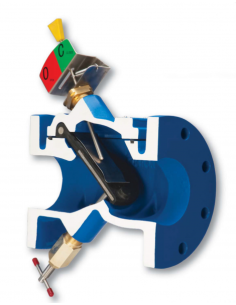
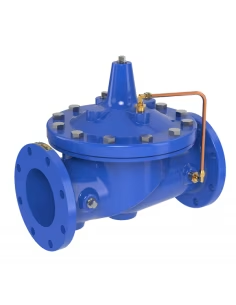
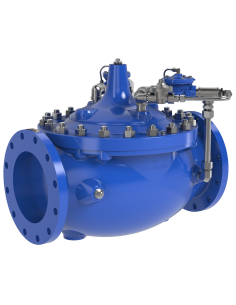
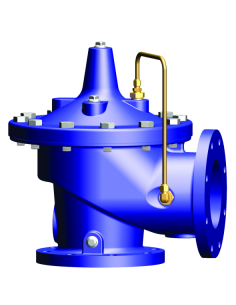
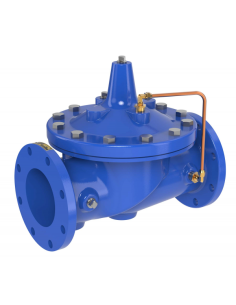
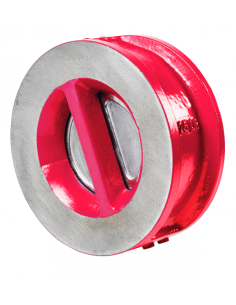
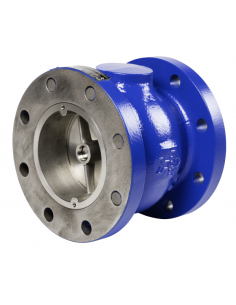
This category includes Cla-Val silent globe check 581, two-door wafer check 582, foot valve 583, flex-check 584, surge blocker 587, check valves 81-01 / 681-01, 81-02 / 681-02, 81-12, 81-18, and the 582SWS two-door check for seawater service. Available configurations include ANSI standard drilling, flanged or wafer end connections, pressure classes 125 lb, 150 lb, 250 lb, and 300 lb, with body and trim materials such as ductile iron, ASTM A216 WCB, ASTM A351 CF8M, ASTM B148 aluminum bronze, Alloy 95200, and brass.
The Cla-Val 581 uses a spring-loaded poppet so that closure starts before flow reversal, reducing non-slam behavior and limiting surge compared with conventional swing checks. The 582 uses dual plates with torsion springs and a shorter disc travel, which is relevant in compact wafer installations and in lines requiring faster dynamic response.
The 583 foot valve is applied on pump suction lines to retain the water column and reduce loss of prime. Type 587 operates as a surge blocker, with a 35° disc travel that enables faster closure than standard swing check designs. The 582SWS is intended for seawater duty where corrosion resistance and material compatibility are critical selection factors.
During maintenance, the seat, disc or poppet, springs, hinge points, gaskets, corrosion condition, and any solids that may prevent tight shutoff should be inspected. In pumping systems, the check valve should be evaluated together with the pump curve, shutdown time, line profile, and water hammer conditions. Leakage class, cracking pressure, allowable pressure drop, and compatibility with fluid temperature and solids content should also be reviewed during specification.