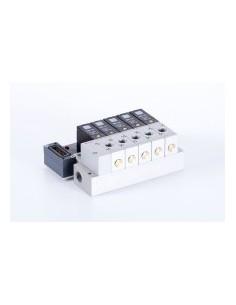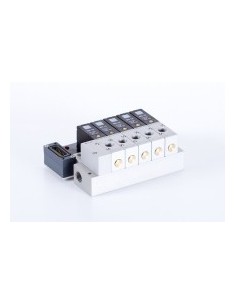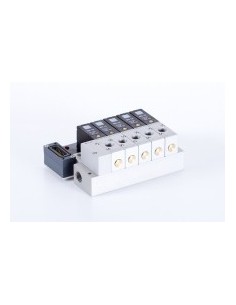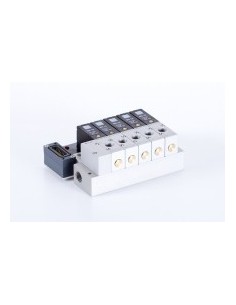

Valve Terminals
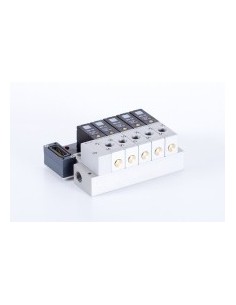
Valve terminals are used for centralized distribution of compressed air and electrical control signals in pneumatic automation systems. They are installed in machine panels, production lines, cylinder manifolds, and pneumatic actuator groups where reduction of individual tubing runs, structured wiring, and clear valve-to-actuator assignment are required.
This category includes Hafner solenoid valve terminals for 10 mm, 16 mm, and 22 mm series valves, covering 3/2, 5/2, and 5/3 valve functions. The 16 mm 3/2 versions support both normally closed (NC) and normally open (NO) configurations, with manual override, coil power consumption of 1.8 W / 3 VA, flow rates of 30, 280, or 450 l/min, and operating pressure ranges up to -0.9 to 10 bar or 3 to 10 bar depending on valve design. Stations can be configured with G 1/8", G 1/4", M5, Ø4, or Ø6 ports, with right-hand or left-hand supply connection.
For double-acting actuator circuits, Hafner 16 mm and 22 mm terminals support 5/2 single-solenoid or double-solenoid valves, as well as 5/3 valves with centre closed, centre exhausted, or centre pressurized spool position. The 16 mm versions are specified with nominal flow rates of 280 or 450 l/min at 3 to 10 bar. The 22 mm versions cover 650 or 1250 l/min with operating pressure from 2 to 10 bar, depending on port size and terminal configuration.
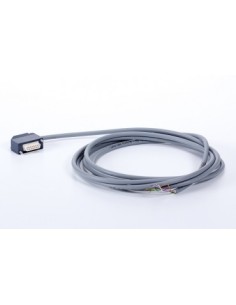
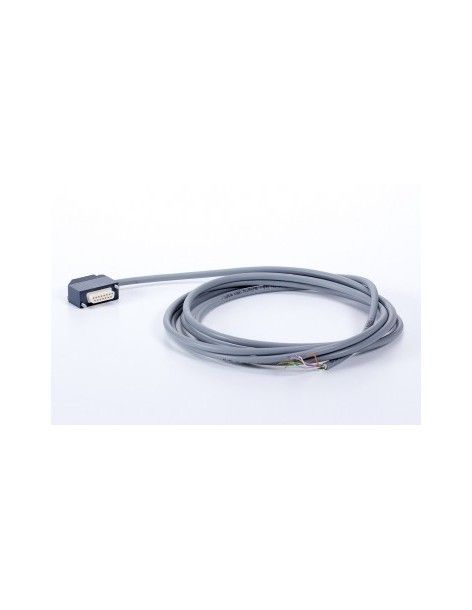
To simplify electrical interfacing, ST40 multi-pin / D-Sub versions are available for the 16 mm and 22 mm series, with side or top cable outlet. Typical configurations include 7 conductors for 6 coils and 15 conductors for 14 coils, supporting reduced panel wiring and defined signal routing.
Selection should be based on number of stations, valve function, branch flow requirement, supply pressure, coil voltage, connector orientation, blanking plates for unused positions, compressed air quality, and service access. Maintenance planning should also consider the ability to replace valves or isolate stations without dismantling the complete pneumatic circuit, as well as leakage paths, exhaust routing, and compatibility with the installed control architecture.