
Dust and Particle Filters
Dust and particulate filters are used as prefilters, intermediate stages, or final retention elements in HVAC systems, process air ducts, electrical enclosures, fan coil units, machine air intakes, blowers, compressors, engines, process tanks, and industrial installations with suspended dust loading. Filter selection should be based on air flow rate, permissible initial and final pressure drop, particle size distribution, solids concentration, available installation space, and maintenance interval.
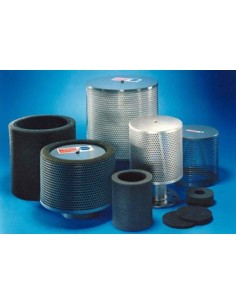
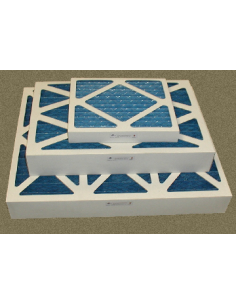
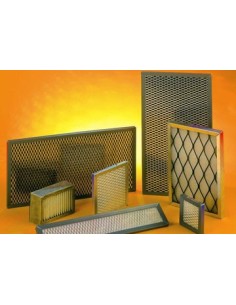
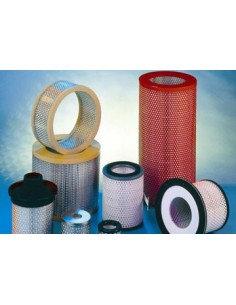
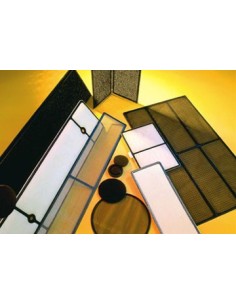
This category includes cleanable circular-frame filters, cylindrical elements, bag filters, disposable or cleanable panel filters, and terminal or higher-efficiency arrangements. Cylindrical elements are available with different filter media and efficiencies from G1 to F9 according to EN 779, with HEPA versions also used where submicron particle retention is required.
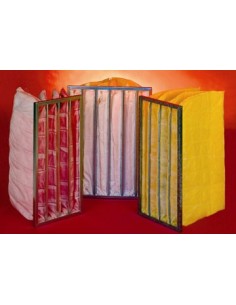
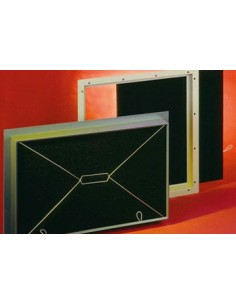
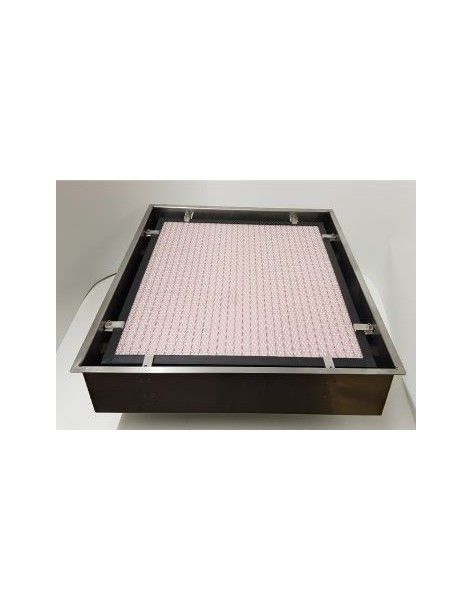
Bag filters are used in HVAC duty where increased dust holding capacity is required with controlled flow resistance. The multi-pocket design, synthetic media, and rigid header frame provide stable seating in the housing. Edge seals can be specified where bypass leakage must be limited.
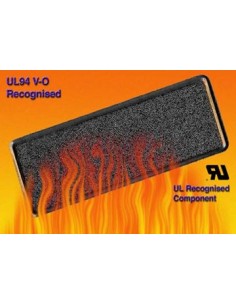
For applications involving humidity or possible wetting of the media, hydrophobic elements are available in M5 to F9 classes and are assessed for performance after water exposure and drying. In electrical enclosures, telecom equipment, computer casework, and HVAC systems requiring limited flame propagation, polyurethane foam filters with UL94 V-0 recognition are used, typically with a thermoplastic-encapsulated wire frame and media thicknesses of 6–13 mm.
Maintenance should be based on differential pressure measurement, visual inspection of dust loading, frame sealing checks, and a defined replacement or cleaning limit, in order to avoid air flow reduction, dust bypass, and premature loading of downstream stages.