
Carbon Filters
Activated carbon filters are used in ventilation, air-conditioning, and industrial exhaust systems for adsorption of gaseous contaminants, odors, VOCs, chemical vapors, and selected inorganic compounds. Filter selection is based on air flow rate, inlet contaminant concentration, required carbon residence time, allowable pressure drop, operating temperature, relative humidity, and chemical compatibility of the adsorbent media.
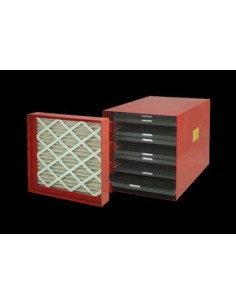
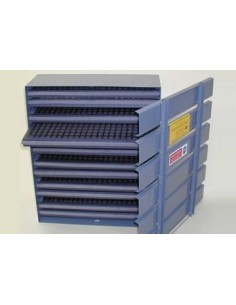
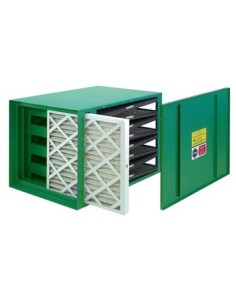
This category includes general-duty units for HVAC air recirculation, heavy-duty filters for chemical vapors and toxic gases, odor control filters, compact or slimline configurations, and dedicated units for tank vent service. Filter arrangements may use V-bank cells, deep-bed carbon sections, or composite elements with impregnated activated carbon where increased adsorption capacity is required for specific contaminants such as acid gases, aldehydes, or mercury vapor.
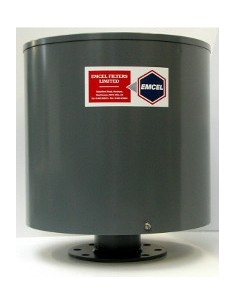
For exhaust duty in chemical plants, laboratories, pharmaceutical facilities, storage areas, or tank systems, technical assessment should include carbon type, media fill mass, contact time, cell replacement method, and housing leak tightness. In tank vent applications, additional considerations include connection arrangement, housing material, flow orientation, weather protection, particulate prefiltration, and, where required by the service, a spark arrester or downstream HEPA stage.
Service life is not determined by differential pressure alone; it depends primarily on carbon loading and contaminant composition. Prefiltration of dust, oil mist, and moisture is critical because surface fouling reduces the effective adsorption area of the carbon. In V-cell assemblies, replacement should be carried out by complete set or by full flow stage in order to prevent early contaminant bypass through exhausted elements.